Reviewed/Updated July 2026
This resource serves as the companion to the Wellness Training: Content Guidelines, Course Objectives and Trainer Qualifications page of The Nevada Registry which outlines the requirements for Wellness training as of February 2025.
- Appendix A: Physical Activity Recommendations by Age
- Appendix B: Nutrition Recommendations by Age
- Appendix C: Obesity Prevention Additional Information
- Appendix D: References
Appendix A: Physical Activity Recommendations by Age
Describes physical activity recommendations by age. Ages are broken down by infants, toddlers, preschoolers, and birth to eight years old. A variety of topics are included in these recommendations such as tummy time, time spent sedentary, structured activity, indoor play, screen time, etc. These topics were common themes in the resources that were utilized to create these recommendations and training. Additionally, there is a section in this appendix to address physical activity recommendations for children with special needs.
- Tummy Time
- Time Spent Sedentary
- Time Spent Outside
- Structured Activity
- Unstructured Activity
- Other Physical Activity
- Indoor Play
- Outdoor Play
- Screen Time
- Children with Special Needs
Appendix: A | B | C | D | Back to Top
Tummy Time

Infants:
- Offer three to five minutes (flexibility for more than five minutes if the infant is finding it enjoyable and tolerable), two times a day or more, increase time/frequency with toleration (NAPSACC, CFOC, AAP)
- Provide tummy time daily for infants that are younger than six months (NAS/IOM)
- Provide tummy time regularly when the infant is awake and alert (AAP)
- Place a toy or object in front of infant to engage play and reaching (CFOC, AAP)
Appendix: A | B | C | D | Back to Top
Time Spent Sedentary
Infants:
- Limit the amount of time seated in a seat, swing, and exersaucer (NAPSACC, CFOC, NAS/IOM)
- Things such as strollers, car seats, and highchairs should be used for their primary purpose only and remove children when the purpose is completed (NAS, IOM)
- Ensure infants are not seated for more than 15 minutes at a time (CFOC)
Toddlers:
- Ensure toddlers are not seated for more than 15 minutes at a time (this excludes naps and meals) (NAPSACC)
- Limit activities that require sitting or standing for more than 30 minutes at a time (NAS/IOM)
- Toddlers should not be sedentary for more than 60 minutes at a time, except for sleeping (SHAPE)
- Limit the use of strollers only when necessary (NAS/IOM)
Preschoolers:
- Ensure preschoolers are not seated for more than 15 minutes at a time (this excludes naps and meals) (NAPSACC)
- Limit activities that require sitting or standing for more than 30 minutes at a time (NAS/IOM)
- Preschoolers should not be sedentary for more than 60 minutes at a time, except for sleeping (SHAPE)
- Limit the use of strollers only when necessary (NAS/IOM)
Appendix: A | B | C | D | Back to Top
Time Spent Outside

Infants:
- Take infants outside two times/day or more often for various activities such as stroller walks and tummy time on a blanket (NAPSACC, CFOC)
- Allow infants the ability to move freely with adult supervision to explore outdoor and indoor environments (NAS/IOM)
- Provide infants with outdoor activity and/or carriage/stroller rides daily if the weather permits (CFOC)
Toddlers and Preschoolers:
- Provide at least 60–90 minutes of outdoor play for children (CFOC)
- Allow for outdoor play time at least three times a day or more at any level of physical activity (NAPSACC)
- Provide daily outdoor time for physical activity when possible (NAS/IOM)
- Provide an outdoor environment that has a variety of portable play equipment, a secure perimeter, some shade, natural elements, an open grassy area, varying surfaces and terrain, and adequate space per child (NAS/IOM)
- Children should play outdoors when conditions do not pose any health and safety concerns such as significant risk of frostbite or heat related illness (CFOC)
- Outdoor play creates the environment for physical activity that supports and promotes the maintenance of a healthy weight and better nighttime sleep (CFOC)
- Short exposure of sunlight to the skin promotes the production of Vitamin D growing children need and require (CFOC)
- Open spaces in outdoor play areas encourage children to develop and enhance gross motor skills and fine motor play in ways that are difficult to duplicate indoors (CFOC)
Appendix: A | B | C | D | Back to Top
Structured Activity
Toddlers:
- Toddlers should have a total of at least 30 minutes of structured physical activity each day (SHAPE)
- Provide developmentally appropriate structured physical activity (NAS/IOM)
Preschoolers:
- Preschoolers should have 60 minutes of structured activity per day (SHAPE)
- Provide developmentally appropriate structured physical activity (NAS/IOM)
Birth to 8 Years Old:
- Create time in the day for two or more structured or caregiver/teacher/adult led activities or games that promote movement over the course of the day (this could be indoors or outdoors) (CFOC)
- Ensure those in charge of the infant’s/child’s well-being are responsible for understanding the importance of physical activity and should promote movement by providing opportunities for structured physical activity (SHAPE)
Appendix: A | B | C | D | Back to Top
Unstructured Activity
Toddlers:
- Toddlers should have a total of at least 60 minutes to several hours per day of unstructured physical activity (SHAPE)
- Toddlers should have a total of 60 minutes or more of outdoor play time a day (SHAPE)
- Provide developmentally appropriate unstructured physical activity (NAS/IOM)
Preschoolers:
- Provide developmentally appropriate unstructured physical activity (NAS/IOM)
Birth to 8 Years Old:
- Ensure those in charge of the infant’s/child’s well-being are responsible for understanding the importance of physical activity and should promote movement by providing opportunities for unstructured physical activity (SHAPE)
Appendix: A | B | C | D | Back to Top
Other Physical Activity

Toddlers:
- Toddlers should have 60–90 minutes of moderate to vigorous activity during an eight-hour day
- Toddlers should have at least 90 minutes of indoor and outdoor physical activity per day (NAPSACC)
- Give preschoolers and toddlers the opportunities for light, moderate, and vigorous physical activity for a minimum of 15 minutes per hour while children are in care (NAS/IOM)
- Allow children toaccumulate moderate to vigorous physical activity over the course of the day in short bursts of 15–30 seconds (CFOC, NV DOE, NAPSE)
Preschoolers:
- Preschoolers should have at least 60 minutes up to several hours of unstructured physical activity (SHAPE)
- Preschoolers should have at least 120 minutes of indoor and outdoor play per day (NAPSACC, 2018 PA guidelines)
- Preschoolers should have 90 minutes or more of outdoor play time (NAPSACC)
- Preschoolers should have 90–120 minutes of moderate to vigorous activity during an eight-hour day (CFOC)
- Give preschoolers and toddlers the opportunities for light, moderate, and vigorous physical activity for a minimum of 15 minutes per hour while children are in care (NAS/IOM)
- Allow children to accumulate moderate to vigorous physical activity over the course of the day in short bursts of 15–30 seconds (CFOC, NV DOE, NAPSE)
Birth to 8 Years Old:
- Provide time for 60 minutes of physical activity daily, designed to promote health-related fitness and movement skills. The duration, frequency, and intensity will vary amongst each child (NV DOE, NAPSE)
Appendix: A | B | C | D | Back to Top
Indoor Play
Toddlers and Preschoolers:
- Provide an indoor environment with a variety of portable play options and adequate space per child (NAS/IOM)
Appendix: A | B | C | D | Back to Top
Outdoor Play
Birth to 8 Years Old:
- Create time for two to three occasions of active play outdoors, with weather permitting (CFOC)
- Ensure the center’s physical environment includes indoor and outdoor recreation areas that encourage all children including infants to be physically active (NAS, IOM)
Appendix: A | B | C | D | Back to Top
Screen Time
Infants:
- Screen time/digital media should not be used with children ages two and younger in early care and education settings (CFOC, AAP, NAPSACC)
- Avoid solo media in children ages 18–24 months. If digital media is introduced, choose high quality programming (AAP)
Toddlers and Preschoolers:
- For children ages two to five years, total exposure (in early care and education and at home combined) to digital media should be limited to one hour per day and with an adult who can help them apply what they are viewing to the world (CFOC)
- In children older than two years, limit media to one hour or less per day of high-quality programming. Shared use between parent or caregiver and child to promote enhanced learning, greater interaction, and limit setting (AAP, CFOC)
- The amount of screen time recommended each week for children two years of age and older is less than 30 minutes. For children two years of age and older, screen time does not include teachers using e-books or tablet computers to read children stories, using Smart Boards for interactive instruction, or connecting with families through video conferencing programs (NAPSACC)
- Limit screen time (television, cell phone, digital media) to less than 30 minutes per day for preschoolers ages two to five years for those in half day programs or less than one hour per day for those in full day programs (IOM/NAS)
- Screen time should be limited to two hours per day, including time spent at home and in childcare (IOM, NAS)
- Adults working with children should limit screen time, including television, cell phone, or digital media to less than two hours per day for children aged two to five (IOM, NAS)
Birth to 8 Years Old:
- For children of all ages, digital media and devices should not be used during meal or snack time, or during nap/rest times and in bed (CFOC)
- The guidance above should not limit digital media use for children with special health care needs who require and consistently use assistive and adaptive computer technology. However, the same guidelines apply for entertainment media use (CFOC)
Appendix: A | B | C | D | Back to Top
Children with Special Needs — Physical Activity Recommendations

- All children should be included in all activities possible unless a specific medical contraindication exists (CFOC, 2018 PA guidelines)
- The individualized service or treatment plan for a child with special health care needs should include services that are aimed at enhancing and improving the child’s health and developmental functioning based on measurable functional outcomes agreed to by the parents/guardians (CFOC)
- Childcare facilities should beaccessible for children and adults with disabilities in accordance with section 504 of the Rehabilitation Act of 1973. This accessibility includes access to the buildings, toilets, sinks, drinking fountains, outdoor play areas, meal and snack areas, and all classroom and therapy areas (CFOC)
- Methods of helping a child with special health care needs or behavior problems to participate in the facility’s programs, including physical activity programs: Orientation for Care of Children with Special Health Care Needs (CFOC)
- When possible, youth with disabilities should work with a healthcare professional or physical activity specialist to understand the types and amounts of physical activity appropriate for them (2018 PA Guidelines)
- When possible, children with disabilities should meet the key guidelines. If they are unable to, they should remain as active as possible (2018 PA Guidelines)
Appendix: A | B | C | D | Back to Top
Appendix B: Nutrition Recommendations by Age
Describes nutrition recommendations by age. Ages for nutrition are broken down by Infants, Toddlers, Preschoolers, and all children. Topics for nutrition recommendations include juice, water, added sugars, hunger cues, vegetables, etc. Common themes were determined based on resources and are displayed in this table. Additionally, there is a section of this appendix to address creating a written nutrition plan and any allergies a child may have.
- Juice
- Formula / Breast Milk / Milk/Dairy and Dairy Alternatives
- Water
- Added Sugars
- Honey
- Hunger Cues
- Fruit
- Grains
- Vegetables
- Oils
- Protein
- Fats
- Prevent Choking
- Safe Snacking
- Meal and Snack Patterns
- Written Nutrition Plan
- Allergies
Appendix: A | B | C | D | Back to Top
Juice
Infants:
- Do not serve any juice (including 100% fruit juice) to any child under the age of one (CFOC, AAP, CACFP, CDC, USDA)
- You can serve two to four ounces of 100% juice at six months or older once they are able to hold a cup (USDA)
Toddlers:
- Serve four ounces or less of 100% juice a day (CFOC, AAP, CACFP, USDA)
- Four ounces or less daily (AAP, CDC)
- These juices must be served in a regular cup (USDA, CFOC, AAP)
- These juices must be pasteurized (USDA, CFOC, AAP, CACFP)
- They should be limited to one time per day (CACFP)
- Children should be encouraged to eat whole fruits and vegetables and be educated about the benefits of the food compared to juice, which lacks fiber and contributes to weight gain (AAP, USDA, CFOC, CACFP)
- Juice is considered a SLOW food (CATCH, CACFP)
- One cup of 100% fruit juice can be considered as one cup from the Fruit Group (MyPlate)
Preschoolers:
- Maximum of four to six ounces of 100% juice daily (CFOC, AAP, CACFP, USDA)
- Four ounces or less daily (AAP, CDC)
- These juices must be served in a regular cup (USDA, CFOC, AAP)
- These juices must be pasteurized (USDA, CFOC, AAP, CACFP)
- They should be limited to one time per day (CACFP)
- Children should be encouraged to eat whole fruits and vegetables and be educated about the benefits of the food compared to juice, which lacks fiber and contributes to weight gain (AAP, USDA, CFOC, CACFP)
- Juice is considered a SLOW food (CATCH, CACFP)
- One cup of 100% fruit juice can be considered as one cup from the Fruit Group (MyPlate)
Appendix: A | B | C | D | Back to Top
Formula / Breast Milk / Milk/Dairy and Dairy Alternatives
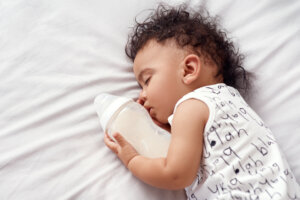
Infants:
- Offer age-appropriate volumes of breast milk or formula to infants, allowing them to self-regulate (NAS, IOM)
- Adults who work with infants are advised to promote and support exclusive breastfeeding for six months and continuation of breastfeeding for one year (NAS/IOM)
- Formula or human milk is appropriate for infants (AAP)
- Provide human milk or iron fortified formula for infants (CFOC, CACFP)
- Serving fortified cow’s milk may put a young child under 12 months old at risk for intestinal bleeding. It also has too many proteins and minerals for an infant’s kidneys to handle and does not have the right amount of nutrients an infant needs (CDC)
- Cow’s milk should not be given to any infant younger than 12 months (CDC, CFOC)
- Frozen human milk should not be defrosted in the microwave (CFOC)
- The mother’s own expressed milk should only be used for her infant. Likewise, infant formula should not be used for a breastfed infant without the mother’s written permission (CFOC)
- Expressed human milk should be placed in a clean and sanitary bottle with a nipple that fits tightly or into an equivalent clean and sanitary sealed container to prevent spilling during transport to home or to the facility (CFOC)
- The bottle or container should be properly labeled with the infant’s full name and the date and time the milk was expressed. The bottle or container should immediately be stored in the refrigerator on arrival (CFOC)
- Human milkshould be defrosted in the refrigerator if frozen, and then heated briefly in bottle warmers or under running water so that the temperature does not exceed 98.6°F (CFOC)
Toddlers:
- Unflavored whole milk must be served to one-year olds (CACFP, CFOC)
- Unflavored low-fat or fat free milk must be served to two- and three-year-olds (CACFP, CFOC)
- Children from 12 months to two years of age should be served only human milk, formula, whole milk, or 2% milk unless documented by a healthcare professional. For overweight children in this age range, the use of reduced fat milk is appropriate only with written documentation from a healthcare professional (CFOC)
- Ages two to three years old can have two cups per day (MyPlate)
- Flavored milk is prohibited for children ages two to five (CACFP)
- Non-dairy milk substitutes that are nutritionally equivalent to milk may be served in place of milk (CACFP, CFOC)
- Children two years of age and older should be served 1% or skim milk (CFOC, CACFP, AAP)
Preschoolers:
- Unflavored low-fat or fat free milk must be served to four- and five-year-olds (CACFP)
- Ages four to eight years old are recommended to have 2.5 cups per day (MyPlate)
- Flavored milk is prohibited for children two to five (CACFP)
- Non-dairy milk substitutes that are nutritionally equivalent to milk may be served in place of milk (CACFP, CFOC)
- Children two years of age and older should be served 1% or skim milk (CFOC, CACFP, AAP)
All Children:
- Raw, unpasteurized milk and milk products should never be used (CFOC, USDA, AAP)
- Yogurt must not contain more than 23 grams of sugar per serving (CFOC, CACFP)
- All dairy products should be pasteurized and Grade A where applicable (CFOC, CDC)
Appendix: A | B | C | D | Back to Top
Water
Infants:
- Healthy infants do not usually need extra water; only provide water to infants whose parents/guardians have received clear instructions from their health care provider (CFOC)
- On hot days, infants receiving human milk in a bottle can be given additional human milk in a bottle but should not be given water, especially in the first six months after birth. Infants receiving formula and water can be given additional formula in a bottle (CFOC)
Toddlers and Preschoolers:
- Safe drinking water should be made available to all children (NAS/IOM, CDC, CFOC, AAP)
- Encourage caregivers to model water consumption (CFOC)
- Water is appropriate for young children (AAP, CFOC)
- Ensure that the water fountains are clean and properly maintained (CDC, CFOC)
- Allow students to have water bottles in class or to go to the water fountain if they need to drink water (CDC)
- Water should not be a substitute for milk at meals or snacks where milk is a required food component unless recommended by the child’s primary health care provider (CFOC)
- When toothbrushing is not done after a feeding, children should be offered water to drink to rinse the food from their teeth (CFOC)
Appendix: A | B | C | D | Back to Top
Added Sugars
Infants:
- Soda, pop, fruit drinks, flavored milks, or other sugar sweetened beverages contain a lot of added sugars. The American Heart Association recommends that children younger than 24 months old are not given any added sugars (AHA, CDC)
Toddlers and Preschoolers:
- Children should consume less than 10% of daily calories from added sugar (2015–2020 Dietary Guidelines)
All Children:
- Foods with added sugars are WHOA foods (flavored milk and yogurt, pancakes and waffles, cookies, cakes, candies, etc.) (CATCH)
- Avoid concentrated sweets such as candy, sodas, sweetened caffeinated drinks, fruit nectars, and flavored milks. Offer foods that have little to no added sugars (CFOC, AAP, CDC)
Appendix: A | B | C | D | Back to Top
Honey
Infants:
- Honey may cause a serious type of food poisoning called botulism for younger children under 12 months old. Do not give any child younger than 12 months old anything with honey (yogurt, honey grahams, etc.) (CDC, AAP)
Appendix: A | B | C | D | Back to Top
Hunger Cues
Infants:
- Caregivers/teachers should feed infants on cue unless the parent/guardian and the child’s primary health care provider give written instructions stating otherwise (CFOC)
- Caregivers/teachers should be gentle, patient, sensitive, and reassuring when responding appropriately to the infant’s feeding cues (CFOC)
- Crying alone is not a cue for hunger unless accompanied by other cues, such as opening the mouth, making sucking sounds, rooting, fast breathing, clenched fingers/fists, and flexed arms/legs (CFOC)
- Whenever possible, the same caregiver/teacher should feed a specific infant for most of that infant’s feedings (CFOC)
- An infant will communicate fullness by shaking the head or turning away from food (CFOC)
Birth through five months:
Hunger: Opens and closes mouth, brings hand to face, flexes arms and legs, roots around chest of carrier, makes sucking noises and motions, sucks on hands, fingers, toes, toys, etc. (USDA, WICC)
Satiety: Slows or decreases sucking, extends arms and legs, extends/relaxes fingers, pushes/arches away, falls asleep, turns head away from nipple, decreased rate of sucking or stops when full (USDA, WICC)
Four to seven months:
Hunger: Smiles, gazes at caregivers, coos during feeding indicating wanting more, moves head toward spoon or tries to swipe food towards mouth (USDA, WICC)
Satiety: Releases nipple, seals lips together, may become distracted or pay more attention to surrounding areas, turns head away from food (USDA, WICC)
Eight to twelve months:
Hunger: Reaches for spoon or food, points to food, gets excited when food is presented, expresses desire for specific food with words or sounds (USDA, WICC)
Satiety: Eating slows down, clenches mouth shut, pushes food away, shakes head to say no more (USDA, WICC)
Appendix: A | B | C | D | Back to Top
Fruit
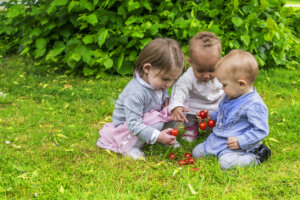
- Ages two to three years old can have one cup per day (MyPlate)
- Ages four to eight years old can have 1–1.5 cups per day (MyPlate)
Appendix: A | B | C | D | Back to Top
Grains
Toddlers (ages 2–3):
- Ages two to three years old are recommended three ounces or 1.5 ounces minimum (MyPlate)
- Half of all grains should be whole grains (MyPlate, CFOC)
- Limit the number of refined grains (CFOC)
Preschoolers (ages 4–8):
- Ages four to eight years old are recommended to have five ounces with a daily minimum of 2.5 ounces (MyPlate)
- Half of all grains should be whole grains (MyPlate, CFOC)
- Limit the number of refined grains (CFOC)
Appendix: A | B | C | D | Back to Top
Vegetables

Toddlers (ages 2–3):
- Ages two to three years old are recommended to have one cup (MyPlate)
- A variety of vegetables from all the subgroups — dark green, red and orange, legumes (beans and peas), starchy, and other — should be consumed (CFOC, 2015–2018 Dietary Guidelines)
Preschoolers (ages 4–8):
- Ages four to eight years old are recommended to have 1.5 cups (MyPlate)
- A variety of vegetables from all the subgroups — dark green, red and orange, legumes (beans and peas), starchy, and other — should be consumed (CFOC, 2015–2018 Dietary Guidelines)
Appendix: A | B | C | D | Back to Top
Oils
- Ages two to three years old are recommended to have three tsp (MyPlate)
- Ages four to eight years old are recommended to have four tsp (MyPlate)
Appendix: A | B | C | D | Back to Top
Protein
- Ages two to three years old are recommended to have two ounces or equivalent
- Ages four to eight years old are recommended to have four ounces (MyPlate)
Appendix: A | B | C | D | Back to Top
Fats
Toddlers:
- The focus should be on replacing unhealthy fats with healthy fats (AAP)
- The omega three fats in oily fish are critical for brain development and are extremely heart healthy (AAP)
Preschoolers:
- GO fat sources are things such as avocado, nuts, salmon, and nut butters (CATCH)
- Slow fat sources are things such as liquid (unsaturated) vegetable oils (CATCH)
- The focus should be on replacing unhealthy fats with healthy fats (AAP)
- The omega three fats in oily fish are critical for brain development and are extremely heart healthy (AAP)
All Children:
- Trans fatty acids should be avoided; WHOA food (CFOC, CDC, 2015–2020 Dietary Guidelines, CATCH)
- Saturated fats should be limited; WHOA food (CDC, 2015–2020 Dietary Guidelines, CATCH)
Appendix: A | B | C | D | Back to Top
Prevent Choking
Toddlers and Preschoolers:
- Avoid small (1/2 inch, less than the size of a nickel), hard, and tough food such as grapes, tough meats, peanuts, round slices of hot dog or sausage, and chewing gum (USDA, AAP)
Appendix: A | B | C | D | Back to Top
Safe Snacking
Toddlers and Preschoolers:
- Many hands touching snacks can spread germs. Divide snacks into small bags or buy single-serve packets. Rinse all fruits and vegetables before slicing and serving them as snacks (AAP, USDA)
Appendix: A | B | C | D | Back to Top
Meal and Snack Patterns
Toddlers and Preschoolers:
- Children that are in care for eight or fewer hours in one day should be offered at least one meal and two snacks or two meals and one snack
- A nutritious snack should be offered to all children in midmorning (if they are not offered a breakfast on-site that is provided within three hours of lunch) and in mid-afternoon
- Children should be offered food at intervals at least two hours apart but not more than three hours apart unless the child is asleep. Some very young infants may need to be fed at shorter intervals than every two hours to meet their nutritional needs, especially breastfed infants being fed expressed human milk. Lunch may need to be served to toddlers earlier than preschool-aged children because of their need for an earlier nap schedule. Children must be awake prior to being offered a meal/snack
- Children should be allowed time to eat their food and not be rushed during the meal or snack service. They should not be allowed to play during these times. Caregivers/teachers should discuss breastfed infants’ feeding patterns with the parents/guardians due to varying frequency at home (CFOC)
Appendix: A | B | C | D | Back to Top
Written Nutrition Plan
- The facility should provide nourishing and appealing food for children according to a written plan developed by a qualified nutritionist/registered dietitian
- Caregivers/teachers, directors, and food service personnel should share the responsibility for carrying out the plan. The director is responsible for implementing the plan but may delegate tasks to caregivers/teachers and food service personnel
- The nutrition plan should include steps to take when problems require rapid response by the staff, such as when a child chokes during mealtimes or has an allergic reaction to a food. The completed plan should be on file, easily accessible to staff, and available to parents/guardians on request
- Some children may have medical conditions that require special dietary modifications. A written care plan from the primary health care provider, clearly stating the food(s) to be avoided and food(s) to be substituted, should be on file
- Staff should be educated about a child’s dietary modifications to ensure that no child in care ingests or has contact with foods he/she should avoid while at the facility
- The facility needs to inform all families and staff if certain foods, such as nut products (e.g., peanut butter, peanut oil), should not be brought from home because of a life-threatening allergy
- Staff should also know what procedure to follow if ingestion or contact occurs. Staff must know their designated roles during an emergency. The emergency plan should be dated and updated biannually (CFOC)
Appendix: A | B | C | D | Back to Top
Allergies
- The eight most common foods to cause anaphylaxis in children are cow’s milk, eggs, soy, wheat, fish, shellfish, peanuts, and tree nuts (CFOC)
- Staff members must know ahead of time what procedures to follow, as well as their designated roles to follow, during an emergency (CFOC)
- Programs may consider using the American Academy of Pediatrics Allergy and Anaphylaxis Emergency Plan (AAP, CFOC)
- When children with food allergies attend an early care and education facility, each child with a food allergy should have a care plan prepared for the facility by the child’s primary health care provider, to include:
- A written list of the food(s) to which the child is allergic and instructions for steps that need to be taken to avoid that food
- A detailed treatment plan to be implemented in the event of an allergic reaction, including the names, doses, and methods of administration of any medications that the child should receive in the event of a reaction. The plan should include specific symptoms that would indicate the need to administer one or more medications.
- Based on the child’s care plan, the child’s caregivers/teachers should receive training, demonstrate competence in, and implement measures for:
- Preventing exposure to the specific food(s) to which the child is allergic
- Recognizing the symptoms of an allergic reaction
- Treating allergic reactions
- Parents/guardians and staff should arrange for the facility to have the necessary medications, proper storage of such medications, and the equipment and training to manage the child’s food allergy while the child is at the early care and education facility
- Caregivers/teachers should promptly and properly administer prescribed medications in the event of an allergic reaction according to the instructions in the care plan
- The facility should notify parents/guardians immediately of any suspected allergic reactions, the ingestion of the problem food, or contact with the problem food, even if a reaction did not occur
- The facility should recommend to the family that the child’s primary health care provider be notified if the child had required treatment by the facility for a food allergic reaction
- The facility should contact the emergency medical services (EMS) system immediately if the child has any serious allergic reaction and/or whenever epinephrine (e.g., EpiPen, EpiPen Jr) has been administered, even if the child appears to have recovered from the allergic reaction
- Parents/guardians of all children in the child’s class should be advised to avoid any known allergies in class treats or special foods brought into the early care and education setting
- Individual child’s food allergies should be posted prominently in the classroom where staff can view them and/or wherever food is served
- The written childcare plan, a mobile phone, and a list of the proper medications for appropriate treatment if the child develops an acute allergic reaction should be routinely carried on field trips or transport out of the early care and education setting
- Exposures may also occur through contact between children or by contact with contaminated surfaces, such as a table on which the food allergen remains after eating
- Some children may have an allergic reaction just from being in proximity to the offending food, without actually ingesting it. Contact should be minimized by washing children’s hands and faces and all surfaces that were in contact with food
- Reactions may occur when a food is used as part of an art or craft project, such as the use of peanut butter to make a bird feeder or wheat to make modeling compound
- For all children with a history of anaphylaxis (severe allergic reaction), or for those with peanut and/or tree nut allergy (whether or not they have had anaphylaxis), epinephrine should be readily available (CFOC)
- Understanding how to read a food label would be very important in avoiding this issue
Appendix: A | B | C | D | Back to Top
Appendix C: Obesity Prevention Additional Information
Describes recommendations that address Obesity Prevention in early childhood. There are sections to address how it is measured in children, risk factors, prevention, and statistics. These facts regarding obesity prevention were common themes based on federal resources. For more information on these topics, consult the appropriate resource in Appendix D.
- How is it Measured in Children?
- Risk Factors for Obesity
- Prevention for Childhood Obesity
- Statistics
How is it Measured in Children?
- Body mass index (BMI) is a measure used to determine childhood overweight and obesity (Let’s Move, CDC)
- Overweight is defined as a BMI at or above the 85th percentile and below the 95th percentile for children and teens of the same age and sex (Let’s Move, CDC)
- Obesity is defined as a BMI at or above the 95th percentile for children and teens of the same age and sex (Let’s Move, CDC)
Risk Factors for Obesity
- High blood pressure
- Heart disease
- Type 2 diabetes (CDC, Let’s Move)
Prevention for Childhood Obesity
- Healthy diet (CDC, Let’s Move)
- Physical activity (CDC, Let’s Move)
- Reduce screen time/sedentary time (CDC, Let’s Move)
- Energy balance (CDC, Let’s Move)
- Nutrition education (CDC, Let’s Move)
- The ECEC setting can directly influence what children eat and drink and how active they are, and build a foundation for healthy habits (CDC)
- Establishing healthy habits for physical activity in early childhood influences activity levels as children grow (CDC)
Statistics
- Obesity prevalence was 13.9% among 2 to 5 year olds (CDC)
- In 2017, 32.6% of Nevada children entering kindergarten were considered overweight or obese; furthermore, the percentage of obese youth in Nevada is steadily climbing (Nevada State Plan Handout)
- Young children who are overweight by kindergarten are four times more likely to have obesity by 8th grade than those not overweight (CDC)
Appendix: A | B | C | D | Back to Top
Appendix D: References
American Academy of Pediatrics. (2018). Botulism. Retrieved from https://healthychildren.org/English/health-issues/conditions/infections/Pages/Botulism.aspx
American Academy of Pediatrics (AAP). (2017). Allergy and Anaphylaxis Emergency Plan. Retrieved from https://www.aap.org/en-us/Documents/AAP_Allergy_and_Anaphylaxis_Emergency_Plan.pdf
American Academy of Pediatrics (AAP). (2016). Selecting Snacks for Toddlers. Retrieved from https://www.healthychildren.org/English/ages-stages/toddler/nutrition/Pages/Selecting-Snacks-for-Toddlers.aspx
American Academy of Pediatrics (AAP). (2016). Feeding and Nutrition Tips: Your 1-Year-Old. Retrieved from https://www.healthychildren.org/English/ages-stages/toddler/nutrition/Pages/Feeding-and-Nutrition-Your-One-Year-Old.aspx
American Academy of Pediatrics (AAP). (2016). Serving Sizes for Toddlers. Retrieved from https://www.healthychildren.org/English/ages-stages/toddler/nutrition/Pages/Serving-Sizes-for-Toddlers.aspx
American Academy of Pediatrics (AAP). (2016). Preschooler’s Diets Shouldn’t Be Fat-Free: Here’s Why. Retrieved from https://www.healthychildren.org/English/ages-stages/preschool/nutrition-fitness/Pages/Reducing-Dietary-Fat-for-Preschoolers.aspx
American Academy of Pediatrics. (2016). American Academy of Pediatrics Recommends No Fruit Juice for Children Under 1. Retrieved from https://www.aap.org/en-us/about-the-aap/aap-press-room/pages/American-Academy-of-Pediatrics-Recommends-No-Fruit-Juice-For-Children-Under-1-Year.aspx
American Academy of Pediatrics. (2016). Media and young minds. Pediatrics, 138 (5).
Birch, L., Parker, L., and Burns, A. (NAM/IOM). (2011). Early childhood obesity prevention policies. The National Academies Press.
Caring for Our Children. (2019). National Health and Safety Performance Standards Guidelines for Early Care and Education Programs. Retrieved from https://nrckids.org/files/CFOC4%20pdf-%20FINAL.pdf
Caring For Our Children. (2018). Chapter 4: Nutrition and Food Service. Retrieved from https://nrckids.org/CFOC/Database/4.3.1.2
Caring for Our Children: National Health and Safety Performance Standards. (2011). Family checklist for physical activity in early care and education. Retrieved from https://nrckids.org/files/physicalchecklist.pdf
Caring for Our Children. (2017). Chapter 4: Nutrition and Food Service. Retrieved from https://nrckids.org/CFOC/Database/4.2.0.5
Caring for Our Children. (2017). CFOC Standards Database. Retrieved from https://nrckids.org/CFOC/Database/
Center for Nutrition Policy and Promotion. (2015). Behavioral Milestones. Retrieved from https://choosemyplate-prod.azureedge.net/sites/default/files/audiences/behavioral-milestones.pdf
Center for Disease Control and Prevention (CDC). (2019). Childhood Nutrition Facts. Retrieved from https://www.cdc.gov/healthyschools/nutrition/facts.htm
Center for Disease Control and Prevention (CDC). (2019). Water Access. Retrieved from https://www.cdc.gov/healthyschools/npao/wateraccess.htm
Center for Disease Control and Prevention (CDC). (2019). Childhood Obesity Facts. Retrieved from https://www.cdc.gov/obesity/data/childhood.html
Center for Disease Control and Prevention (CDC). (2019). Obesity Among WIC-Enrolled Young Children. Retrieved from https://www.cdc.gov/obesity/data/obesity-among-WIC-enrolled-young-children.html
Center for Disease Control and Prevention. (2018). Foods and Drinks to Limit. Retrieved from https://www.cdc.gov/nutrition/InfantandToddlerNutrition/foods-and-drinks/foods-and-drinks-to-limit.html
Center for Disease Control and Prevention (CDC). (2018). Defining Childhood Obesity. Retrieved from https://www.cdc.gov/obesity/childhood/defining.html
Center for Disease Control and Prevention (CDC). (2018). Obesity. Retrieved from https://www.cdc.gov/healthyschools/obesity/index.htm
Center for Disease Control and Prevention (CDC). (2016). Childhood Obesity Causes and Consequences. Retrieved from https://www.cdc.gov/obesity/childhood/causes.html
Center for Disease Control and Prevention (CDC). Helping Young Children Thrive. Retrieved from https://www.cdc.gov/obesity/downloads/Early-Care-Education-ECE-WEB-508.pdf
The Child and Adult Care Food Program. New Meal Plan Reminders. Retrieved from https://www.cacfp.org/files/7615/0463/8220/NMP_Reminder_One_Page.pdf
The Child and Adult Care Food Program (CACFP). Go, Slow, Whoa Foods. Retrieved from https://www.cacfp.org/files/7615/3549/7123/Go_Slow_Whoa_Foods_RV3.pdf
The Child and Adult Care Food Program (CACFP). (2019). Vegetable and Fruit Requirements in the Child and Adult Care Food Program; Questions and Answers. Retrieved from https://www.cacfp.org/files/7414/7499/1042/Vegetable_and_Fruit_Requirements_in_the_CACFP.pdf
Choose My Plate. All About the Fruit Group. Retrieved from https://www.choosemyplate.gov/eathealthy/fruits
Choose My Plate. All About the Dairy Group. Retrieved from https://www.choosemyplate.gov/eathealthy/dairy
Choose My Plate. All About the Grain Group. Retrieved from https://www.choosemyplate.gov/eathealthy/grains
Choose My Plate. All About the Vegetables Group. Retrieved from https://www.choosemyplate.gov/eathealthy/vegetables
Choose My Plate. All About the Oils Group. Retrieved from https://www.choosemyplate.gov/eathealthy/oils
Choose My Plate. All About the Protein Foods Group. Retrieved from https://www.choosemyplate.gov/eathealthy/protein-foods
Coordinate Approach to Child Health (CATCH). (2019). Go-Slow-Whoa. Retrieved from https://catchinfo.org/wp-content/uploads/2019/10/GO-SLOW-WHOA-Change-Summary-One-Pager.pdf
Korioth, T. (2018). Remind families: honey can cause infant botulism. Retrieved from https://www.aappublications.org/news/2018/11/19/honey111918
Let’s Move. Getting Started: What’s Obesity? Retrieved from https://letsmove.obamawhitehouse.archives.gov/obesity
Let’s Move. Health Problems and Childhood Obesity. Retrieved from https://letsmove.obamawhitehouse.archives.gov/health-problems-and-childhood-obesity
Let’s Move. Early Education Providers. Retrieved from https://letsmove.obamawhitehouse.archives.gov/early-education-providers
McGuire, S. (2012). Institute of Medicine (IOM) early childhood obesity policies. Washington, DC. The National Academic Press: 2011. Advances in Nutrition, 3 (1).
NAP SACC. (2017). NAP SACC physical activity best practice recommendations for child care facilities. Retrieved from https://www.education.ne.gov/wp-content/uploads/2017/07/NAP-SACC-Physical-Activity-Best-Practice-Recommendations-for-Child-Care-Facilities.pdf
National Resource Center for Health and Safety in Child Care and Early Education. (2012). User Guide for the Licensing Toolkit Action Sheets. Retrieved from https://nrckids.org/files/WaterJuiceToolkitCombined.pdf
National Resource Center for Health and Safety in Child Care and Early Education. (2011). Family Checklist for Nutrition in Early Care and Education. Retrieved from https://nrckids.org/files/nutritionchecklist.pdf
The National Academic Press. (2011). Early Childhood Obesity Prevention Policies. Retrieved from http://www.nationalacademies.org/hmd/Reports/2011/Early-Childhood-Obesity-Prevention-Policies/Recommendations.aspx
Nevada State Board of Education (NV DOE; NAPSE). (2011). Nevada pre-kindergarten standards revised and approved: 2010. Building a foundation for school readiness and success in pre K-12 and beyond. Retrieved from http://www.doe.nv.gov/uploadedFiles/nde.doe.nv.gov/content/Early_Learning_Development/State_PreK/PreKStandards.pdf
Office of Disease Prevention and Control. (2020). Dietary Guidelines 2015-2020. Retrieved from https://health.gov/our-work/food-nutrition/2015-2020-dietary-guidelines/guidelines/introduction/
State of Nevada. (2017). Early Childhood Obesity Prevention Plan. Retrieved from http://dpbh.nv.gov/uploadedFiles/dpbhnvgov/content/Programs/Obesity/Early%20Childhood%20Obesity%20Prevention%20Plan.pdf
Society of Health and Physical Educators (SHAPE America). Retrieved from https://www.shapeamerica.org/standards/guidelines/activestart.aspx
U.S. Department of Health and Human Services. (2018 PA Guidelines). (2018). Physical activity guidelines for Americans 2nd edition. Retrieved from https://health.gov/sites/default/files/2019-09/Physical_Activity_Guidelines_2nd_edition.pdf
USDA Choose My Plate (MyPlate). (2020). MyPlate Tips for Preschoolers. Retrieved from https://www.choosemyplate.gov/browse-by-audience/view-all-audiences/children/health-and-nutrition-information/preschoolers-food-groups
USDA Choose My Plate (MyPlate). (2020). 10 Tips: Food Safety for Preschoolers. Retrieved from https://www.choosemyplate.gov/ten-tips-food-safety-tips-preschoolers
USDA, Food and Nutrition Service. (2016). Infant Development Skills and Hunger and Satiety Cues Job Aid. Retrieved from https://wicworks.fns.usda.gov/resources/infant-developmental-skillshunger-and-satiety-cues
Wang, J, Sicherer, S. H., and Section on Allergy and Immunology. (2017). Guidance on completing a written allergy and anaphylaxis emergency plan. Pediatrics, 139 (3).
WIC. The Use of Fruit Juice with Infants and Preschoolers. Retrieved from https://wicworks.fns.usda.gov/wicworks/Sharing_Center/MA/Toolkit/juice_paper.pdf
Appendix: A | B | C | D | Back to Top
This page may undergo periodic review and revision.